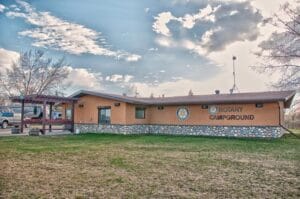
May until the end of September:
Open Daily from 8 AM to 8 PM
Breaking the cycle of poverty in Guatemala through education.
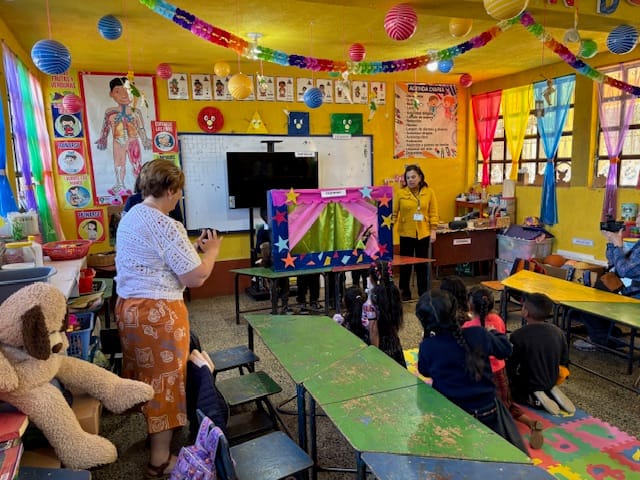
The Guatemala Literacy Project (GLP) was formed in 1997. It all began with Rotarians Enrique Gandara and Juan Forster from the Guatemala Oeste and Sur clubs. They took notice of the innovative textbook cooperative that the nonprofit organization Cooperative for Education (CoEd) had set up at La Labor School, and they approached CoEd to become their implementation partner, developing literacy programs in other Guatemalan schools. Rotarians Gandara and Forster recruited the Rotary clubs of North Raleigh, NC and Lander, WY to serve as International Co-Sponsors, and the Guatemala Literacy Project (GLP) was born.
Guatemala’s Central and Western Highlands exhibit one of the most extreme combinations of systemic poverty, illiteracy, and inequality in the hemisphere. The indigenous populations that inhabit these regions suffer from malnutrition (rates of which rank among the worst in the world), poor health outcomes, racism, high rates of illiteracy, and low levels of educational attainment. Together, these factors virtually guarantee that the next generation will be no better off than the last.
79% of indigenous Guatemalans live in poverty.
90% of impoverished kids never graduate from high school.33%
33% of indigenous adults cannot read or write.
Sustainability: Textbooks and Computers
The Textbook and Computer Programs use a sustainable “revolving fund” model, whereby parents pay a small rental fee for their children to use the books or computers. Program schools save this money in a designated fund which is eventually used to buy new books and computers as the old ones wear out. Thus the programs are 100% financially self-sustaining.
91% of schools that have been active in the Textbook Program for at least five years have replaced their books at least once, and 33 Computer Centers have renewed their technology as well.
The Spark Reading Program achieves sustainability by building local capacity for reading instruction. The teachers who participate in Spark are able to better educate generations of future students, and they also share their knowledge with other teachers. As American writer and historian Henry Adams said famously: “A teacher affects eternity; you can never know where his influence stops.” In turn, the students who benefit from these Spark-trained teachers spread their newfound love of reading throughout their homes, their schools, and their communities, fostering a true culture of reading.
The Rise Youth Development Program achieves sustainability by transforming the lives of indigenous young people who then contribute to the development of their entire country. Currently, 53% of program graduates are helping to pay for their younger siblings’ education—breaking the cycle of poverty for more young people in their own generation.
Provide books, computers and training. Join the Global Grant
Get kids in school to use them. Sponsor a student.
Visit the programs in Guatemala. Volunteer in Guatemala.
Get more details here!